
For a superintendent or curriculum director.
Concrete AI literacy. Observational record only.
Kindergarten through Grade 5. The child works the material. The adult keeps the record.
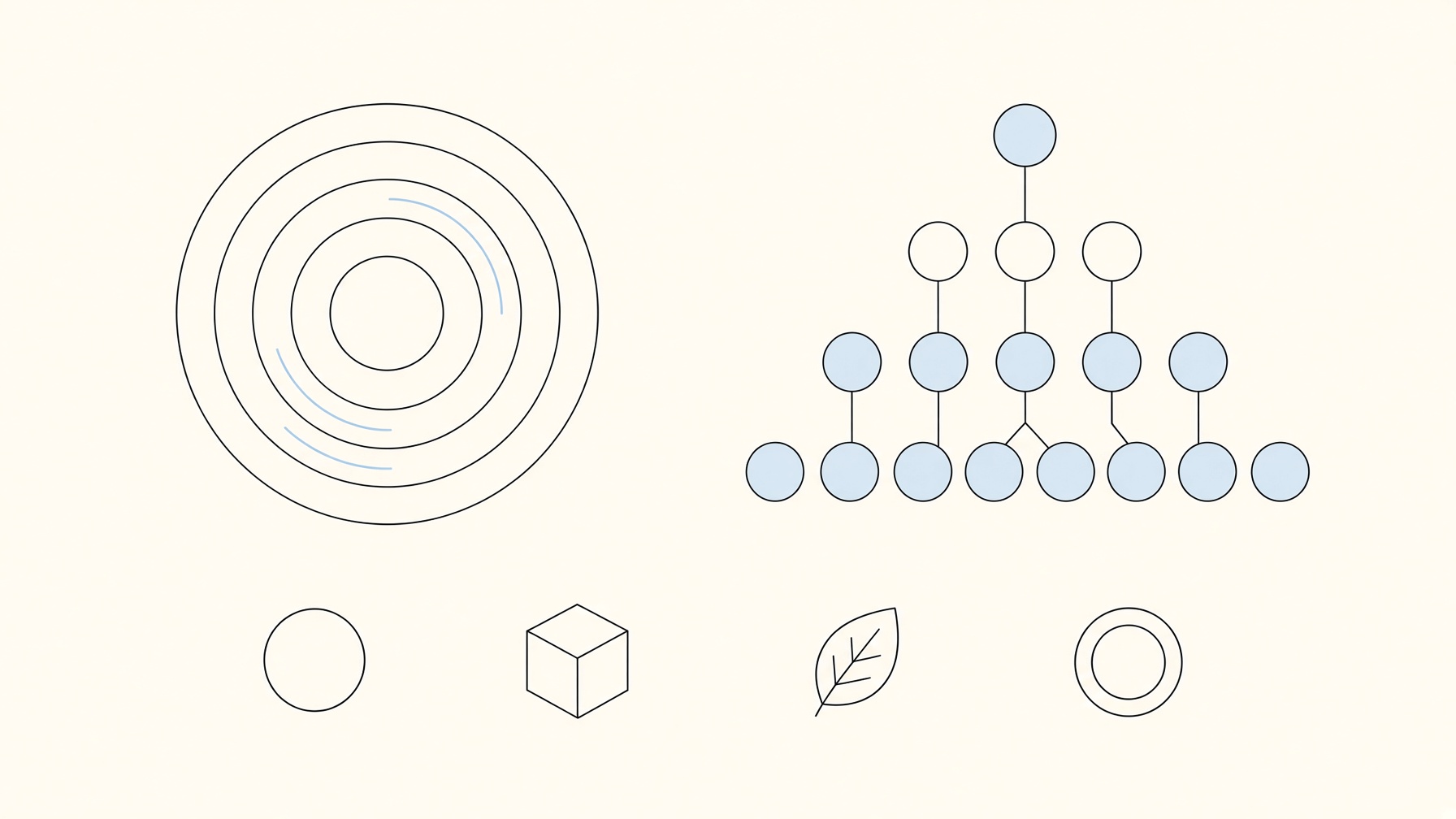
Materials
Naming, sorting, mapping, and correction. The game is the lesson.
Record
Presented, Working, or Mastered. Beginning, Middle, and End are observed.
Alignment
AI4K12 Five Big Ideas. Florida Rule 6A-1.0957.
What a school receives
- The lessons, grade by grade.
- Digital materials that mirror the physical ones.
- Printable worksheets, with a teacher key kept separate.
- An educator desk with the class map, the next material, and a parent summary a teacher can share.
A pilot may be one grade or one school. Students enter with a class code. Child names are not required.
How the materials are drawn
Large enough to see. Quiet enough to work.





The size follows the grade. A kindergarten piece is drawn about half again the size of a Grade 5 piece. Words inside a game are larger than the words on a letter. Lines are heavier. A label that would have been a hairline is now a word a child can read across a desk.
Color is never the only signal. Each object has a name and a form. A mismatch is marked in words, not by color alone. This is for a child who does not see the red, and for a child who hears the room more than the screen.
Sound is a tone for the material. It can be turned off. If the device is set to reduce motion, the pieces do not travel. Nothing flashes. Nothing spins. The picture does not depend on sound to be understood.
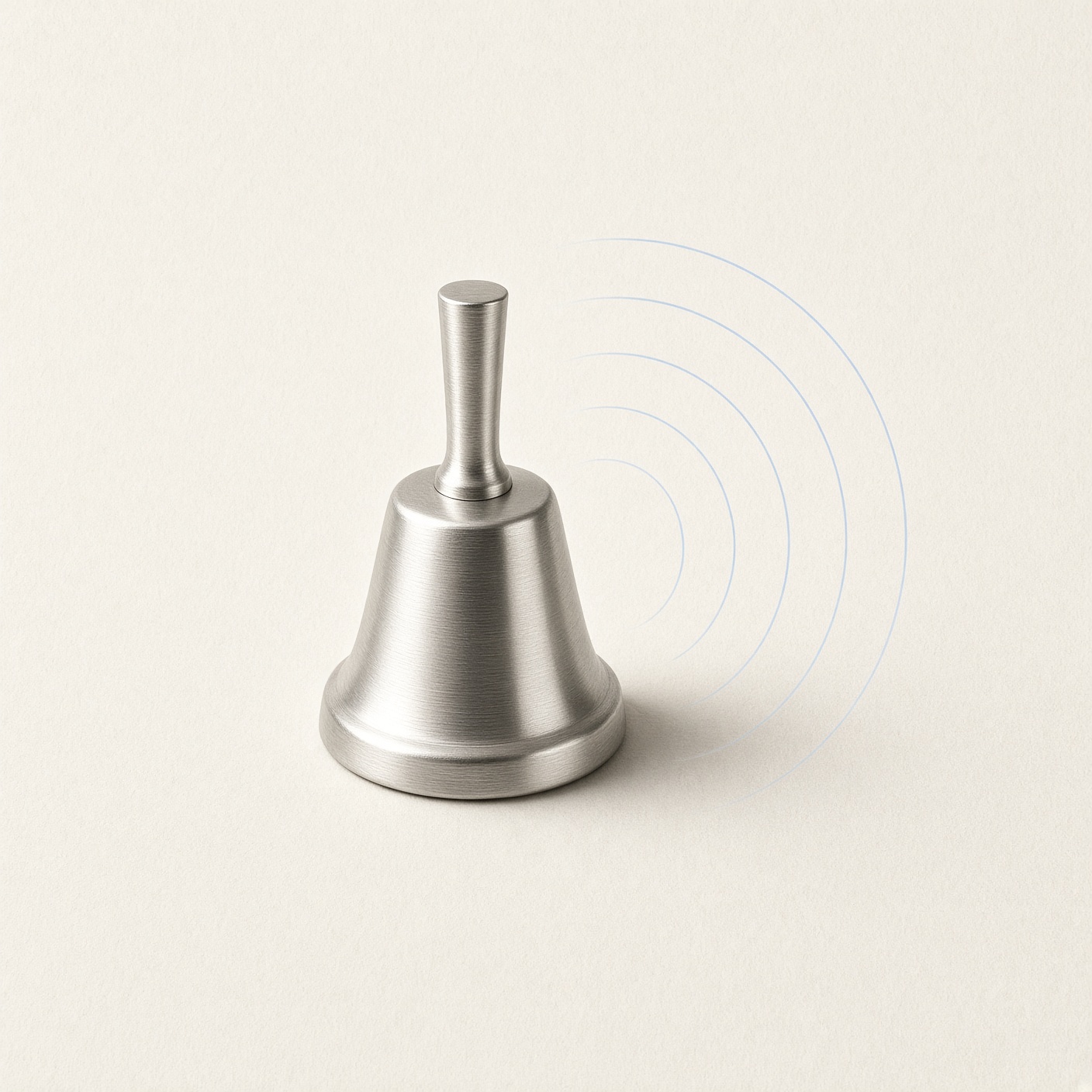
The pictures are objects. A disc, a cube, a leaf, a bell, a ring. They have no face. Florida Rule 6A-1.0957 asks for inert material. A cartoon host would break that rule and would also pull the eye off the feature.
The same lesson is on paper. A child who needs the larger view, the quieter room, or the printed sheet is still on the lesson. The worksheet is the material, not a lesser copy.
What this is not
- Not a diagnostic.
- Not a scored practice platform.
- Not an AI tutor.
The material stays on the desk. The record stays with the adult.
Five Big Ideas
- 1. Perception. A machine gathers signals through sensors. Meaning comes later.
- 2. Representation and reasoning. A map, a tree, or a path stands in for the world. It is not the world.
- 3. Learning. A model follows the examples it is given. Change the examples and the result changes.
- 4. Natural interaction. Clear language reduces error. Ambiguous language produces unreliable results.
- 5. Societal impact. Human choices about examples and rules affect who is included.
Alignment, one pass
Florida computer science standards adopted in 2024. A partial mark means the lesson touches the benchmark and does not cover all of it.
| Grade | Unit | Big idea | AI4K12 | Florida CS |
|---|---|---|---|---|
| K | Senses and Sensors | Perception | 1-A-i, 1-A-ii | SC.K.CO.1.2, SC.K.PE.2.1, SC.K.PE.3.1, SC.K.TI.1.1 |
| K | Naming Features | Perception, Representation and reasoning | 2-A feature table | SC.K.PE.2.1, SC.K.PE.2.2, SC.K.PE.3.1 |
| K | A Map Is Not the Territory | Representation and reasoning | 2-A-i | SC.K.PE.3.2 partial |
| K | Precise Language | Natural interaction | 4-A | SC.K.PE.1.1, SC.K.PE.1.2, SC.K.PE.3.2 |
| 1 | Decision Paths | Representation and reasoning | 2-C | SC.1.PE.1.1, SC.1.PE.3.3 partial, SC.K12.CTR.4.1, SC.1.TI.1.3 partial |
| 1 | Neighborhood Maps | Representation and reasoning | 2-A-i | SC.1.PE.2.3, SC.1.PE.3.3 partial |
| 1 | If Then | Representation and reasoning, Natural interaction | 2-C | SC.1.PE.1.1 |
| 2 | Pattern Prediction | Learning | 3-A-ii | SC.2.PE.3.1, SC.K12.CTR.6.1 partial |
| 2 | Instruction Sequences | Natural interaction | 4-A | SC.2.PE.3.2 partial, SC.K12.CTR.4.1, SC.K12.CTR.5.1 |
| 2 | Labeled Examples | Learning | 3-A-iii | SC.2.PE.2.2, SC.2.TI.1.3 partial |
| 3 | Hierarchical Maps | Representation and reasoning | 2-A-iii | SC.3.PE.3.4 partial, SC.3.PE.3.5 |
| 3 | Decision Trees | Learning, Representation and reasoning | 3-A-ii | SC.3.PE.1.1 partial, SC.3.PE.3.3 partial, SC.3.TI.1.3 partial |
| 3 | Self-Correction | Learning | 3-A-v | SC.3.PE.3.5, SC.K12.CTR.2.1 |
| 4 | Training from Examples | Learning, Societal impact | 3-C-iii, 5-A-i | SC.4.PE.2.1, SC.4.PE.2.2, SC.4.TI.1.3 partial, SC.4.TI.1.4, SC.4.CC.1.2, SC.K12.CTR.6.1 partial |
| 4 | Language Clarity | Natural interaction | 4-A-ii | SC.4.CC.1.4 |
| 4 | Evaluating Outputs | Natural interaction, Learning | 4-A | SC.4.TI.1.4, SC.K12.CTR.6.1 partial |
| 5 | Classification Review | Representation and reasoning | 2-A | SC.5.PE.2.3, SC.5.PE.3.2 partial, SC.5.PE.3.4 |
| 5 | Human Choices | Societal impact, Learning | 5-A-i | SC.5.TI.1.1 partial, SC.K12.CTR.6.1 |
| 5 | Early Consequences | Societal impact | 5-A | SC.5.TI.1.1 partial, SC.5.TI.2.4 partial, SC.5.PE.3.4 |
Florida Rule 6A-1.0957. The material stays inert. No figure stands in for a mind.
These lessons can support Foundations of Computer Science, courses 5002030 through 5002035, and Grades 3 to 5 Unplugged Computer Science, course 5002040. They do not replace those courses.
Not covered: personal health and device use, cybersecurity, keyboarding, copyright practice, and block coding.
The Emerging Technologies strand that analyzes artificial intelligence is written for grades 6 through 12. Elementary benchmarks that name artificial intelligence are SC.1.TI.1.3, SC.2.TI.1.3, SC.3.TI.1.3, and SC.4.TI.1.3. Kindergarten has none.
SC.5.PE.1.1 asks how computers model intelligent behavior. This curriculum does not claim that benchmark.
For a superintendent or curriculum director.
Letter
Red Desk Press
The curriculum

17 November 2026

Dear Superintendent,

The curriculum of Red Desk Press is a Kindergarten through Grade 5 AI literacy program. The materials are concrete. Children name features, sort objects, map relations, and correct mismatches. The record is observational. A teacher marks Presented, Working, or Mastered. There are no points, scores, or timers.

The program follows the AI4K12 Five Big Ideas. It meets Florida Rule 6A-1.0957. Materials stay inert. No figure stands in for a mind. Observation stays with the adult.

A school receives the lessons, the digital materials that mirror the physical ones, printable worksheets, and an educator desk. The desk shows the class map, the next material for each child, and a short summary that can be shared with parents. Student entry uses a class code. Child names are not required.

This is not a diagnostic platform. It is not a scored practice system. It is a set of materials and a record a teacher can keep while the child works. A district may begin with one grade or one school.

I am available to walk through the materials and the observation record.

Sincerely,

Devidasa Kawal
Founder, Red Desk Press
A district may begin with one grade.
Curriculum directors and superintendents may write to dkawal@reddeskpress.com. A school that is ready to ask for a desk may also use the school inquiry.